ESC
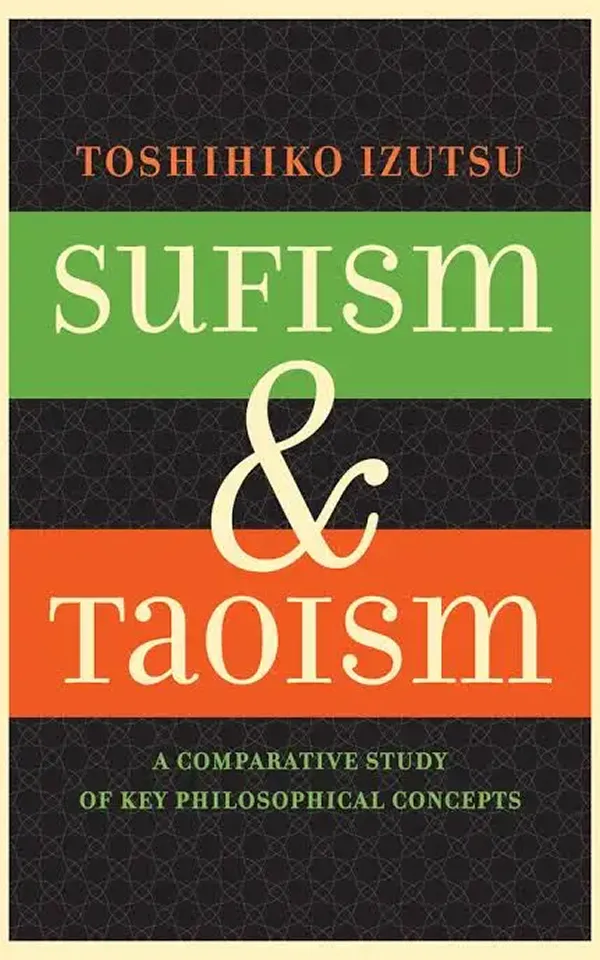
Cover — Sufism and Taoism: A Comparative Study of Key Philosophical Concepts

Sufism and Taoism: A Comparative Study of Key Philosophical Concepts

Izutsu's landmark comparative study of Ibn Arabi and Lao Tzu. The five planes of Being, the Perfect Man, and the mirror of the Absolute across traditions.

Toshihiko Izutsu · book · Seed

Part I - Ibn Arabi

Chapter I - Dream & Reality

So-called ‘reality’, the sensible world which surrounds us and which we are accustomed to regard as ‘reality’, is, for Ibn Arabi, but a dream. We perceive by the senses a larger number of things, distinguish them one from another, put them in order by our reason, and thus end up establishing something solid around us. We call that construct ‘reality’ and do not doubt that it is real.

In others terms, such a thing is not Being (wujūd) as it really is. Living as we do in this phenomenal world, Being in its metaphysical reality is no less imperceptible to us than phenomenal things are in their phenomenal reality to a man who is asleep and dreaming of them.

Should we abandon once for all this illusory world and go out of it in search of an entirely different world, a really real world?

Ibn Arabi does not take such a position, because, in his view, ‘dream’, ‘illusion’ or ‘imagination’ does not mean something valueless or false; it simply means ‘being a symbolic reflection of something truly real’.

Thus ‘death’ does not mean here death as a biological event. It means a spiritual event consisting in a man’s throwing off the shackles of sense and reason, stepping over the confines of the phenomenal, and seeing through the web of phenomenal things what lies beyond. It means, in short, the mystical experience of ‘self-annihilation’ (fana).

What, then, is that Something which hides itself behind the veil of the phenomenal? The answer is given immediately. It is the Absolute, the real or absolute Reality which Ibn Arabi calls al-haqq.

In Ibn Arabi’s view, if ‘reality’ is an illusion, it is not a subjective illusion but an ‘objective’ illusion; that is, an unreality standing on a firm ontological basis.

Reference must be made to the ontological conception peculiar to Ibn Arabi and his school of the ‘five planes of Being’:

The plane of the Essence (dhat), the world of the absolute non-manifestation (al-ghayb al-mutlaq) or the Mystery of Mysteries.

The plane of the Attributes and the Names, the Presence of Divinity (uluhiyah)

The plane of the Actions, the presence of Lordship (rububiyah)

The plane of Images (amthal) and Imagination (khayal)

The plane of the senses and sensible experience (mushahada)

There exists between the higher and lower levels such an organic relation.

In the eyes of a man possessed of this kind of spiritual capacity, the whole world of ‘reality’ ceases to be something solidly self-sufficient and turns into a deep mysterious forêt de symboles, a system of ontological correspondences.

The majority of people live attached and confined to the lowest level of Being, that of sensible things. That is the whole world of existence for their opaque consciousness.

How can a man cultivate such an ability for seeing things symbolically? What should he do in order that the material veil covering things be removed to reveal the realities that lie beyond?

As a necessary first step, one has to go down to the most elemental level of existence in imitation of the heavenly Enoch who went down to the earth and began by living at the lowest level of earthly life. As suggested above, one must not stop halfway. Abandoning all activity of Reason and not exercising any longer the thinking faculty, one fully realizes the ‘animality’ (hayawaniyah) which lies hidden at the bottom of every human being.

Watertight compartments into which Reality is divided by human Reason lose their ontological validity in such an ‘animal experience’.

A man who has thus gone all the way to the furthest limit of animality, if he still continues his spiritual exercise, may rise to the state of pure Intellect where its activity cannot be impeded by anything bodily and physical. The eye of the pure Intellect itself, even ordinary things around him begin to disclose to him their true ontological structure.

Such a man is in the stage of the Divine Names and Attributes.

Only ‘half’ of the cognition of the Absolute reality.

A man of this is certainly tamm (complete) but not yet perfect (kamil). In order to that he might be kamil, he has to go further and raise himself to a point where he sees that all, whether the permanent archetypes or the things of nature or again he himself who is actually perceiving them, are after all, nothing but so many phenomenal forms of the Divine Essence on different levels of Being; that through all the ontological planes, there runs an incessant and infinite flow of the Divine Being.

How, then, does the Perfect Man, that is, a man who has been completely awakened, see the world? That will be the main theme of the following chapters.

Chapter II - The Absolute in its Absoluteness

In religious non-philosophical discourse the Absolute is normally indicated by the word God or Allah. But in the technical terminology of Ibn Arabi, the word Allah designates the Absolute not in its absoluteness but in a state of determination.

The Absolute in this sense is unknowable to us because it transcends all qualifications and relations that are humanly conceivable.

It is forever a mystery, the Mystery of mysteries.

Thus the phrase ankar-nakirat means “the most unknown of all unknown”.

In this respect the Absolute at this is the One (al-ahad).

It means the essential primordial and absolutely unconditional simplicity of Being where the concept of opposition is meaningless.

The Absolute Reality in itself remains for ever “a hidden treasure”, hidden in its own divine isolation.

As a famous Tradition says: “God hides Himself behind seventy thousand veils of light and darkness. If He took away these veils, the fulgurating lights of His face would at once destroy the sight of any creature who dared to look at it.”

The Mirror Analogy

That which is seen in the mirror of the Absolute is the form of the man who is looking; it is not the form of the Absolute. To be sure, it is no other than the very Essence of the Absolute that discloses itself to his eye, but this self-manifestation is done in his (the man’s) form, not in its (the Essence’s form) - al-Qashani

The image reflected in the mirror of the Absolute has two different aspects:

It is, in the first place, a self-manifestation of the Absolute in a particular form in accordance with the demand of the ‘preparedness’ of the locus.

But in the second place, it is the Form of the Divine self-manifestation, however much it may be particularized by the demand of the locus.

Through the profound experience of ‘unveiling’ the reflected image ceases to be a veil, and the man begins to see not only his own image but the Form of the Absolute assuming the form of his own.

This, Ibn Arabi asserts, is the highest limit beyond which the human mind is never allowed to go.

Even for the Perfect Man there can be no spiritual stage realizable at which he is able to know the Absolute as it really is; in its absoluteness. Yet, such a man is in position to intuit the Absolute as it reveals itself in himself and in all other things.

Chapter III - The Self-Knowledge of Man

Ibn Arabi emphatically asserts that the only right way of knowing the Absolute is for us to know ourselves. And he bases this view on the very famous Tradition which runs: “He who knows himself knows his Lord.” What is suggested is, for Ibn Arabi, that we should abandon the futile effort to know the Absolute per se in its absolute non-manifestation, that we must go back into the depth of ourselves, and perceive the Absolute as it manifests itself in particular forms.

In Ibn Arabi’s world-view, everything, not only ourselves but all the things that surround us, are so many forms of the Divine self-manifestation. And in that capacity, there is objectively no essential difference between them. Subjectively, however, there is a remarkable difference. All the exterior things surrounding us are for us “things” which we look at only from outside. We cannot penetrate into their interior and experience from inside the Divine life pulsating within them. Only into the interior of ourselves are we able to penetrate by our self-consciousness and experience from inside the Divine activity of self-manifestation which is going on there. It is in this sense that to “know ourselves” can be the first step toward our “knowing the Lord.”

To the eye of a man who has attained this spiritual stage there arises a scene of extraordinary beauty. He sees all the existent things as they appear in the mirror of the Absolute and as they appear one in the other. All these things interflow and interpenetrate in such a way that they become transparent to one another while keeping at the same time each its own individuality. This is the experience of “unveiling” (kashf).

Chapter IV - Metaphysical Unification and Phenomenal

Ibn Arabi calls the hidden and the self-revealing aspect tanzih and tashbih, respectively. Tanzih is used in theology in the sense of “declaring or considering God absolutely free from all imperfections”… In contrast to this, tashbih means in theology “to liken God to created things.” Ibn Arabi understands these terms in quite an original manner: tanzih in his terminology indicates the aspect of “absoluteness” (itlaq) in the Absolute, while tashbih refers to its aspect of “determination” (taqayyud). Both are in this sense compatible with each other and complementary, and the only right attitude is for us to assert both at the same time and with equal emphasis.

‘Tanzih’, as Ibn Arabi says, ‘in the opinion of the people who know the truth, is nothing less than delimiting and restricting God’. He who ‘purifies’ God purifies Him from all bodily attributes, but by that very act he is (unconsciously) ‘assimilating’ (tashbih) Him with non-material, spiritual beings.

Only when one combines tanzih and tashbih in one’s attitude, can one be regarded as a “true knower” (‘arif) of the Absolute… To have recourse exclusively to tashbih in one’s conception of the Absolute is to fall into polytheism; to assert tanzih to the exclusion of tashbih is to sever the divine from the whole created world.

Chapter V - Metaphysical Perplexity

The right attitude which combines in itself tanzih and tashbih is, in short, to see the One in the Many and the Many in the One, or rather to see the Many as One and the One as Many. The realization of this kind of coincidentia oppositorum is called by Ibn Arabi “perplexity” (hayrah). As such, this is a metaphysical perplexity because here man is impeded by the very nature of what he sees in the world from definitely deciding as to whether Being is One or Many.

An infinity of things which are clearly different from each other and some of which stand in marked opposition to one another are, with all the divergencies, one and the same thing. The moment man becomes aware of this fact, it cannot but throw his mind into bewildering confusion. This “perplexity” is quite a natural state for those who have opened their eyes to the metaphysical depth of Being.

But on reflection it will be realized that the human mind falls into this “perplexity” because it has not yet penetrated deeply below the level of superficial understanding. In the mind of a sage who has experienced the Unity of Being in its real depth there can no longer be any place for any “perplexity.”

Chapter VI - The Shadow Of the Absolute

Know that what is generally said to be “other than the Absolute” or the so-called “world,” is in relation to the Absolute comparable to shadow in relation to the person. The world in this sense is the “shadow” of God.

Do you not see how all shadows appear blackish? This fact indicates the inherence of obscurity in the shadows due to an intervening distance in the relation between them and the objects which project them. Thus, even if the object be white, the shadow it casts takes on a blackish color.

The world is known just to the same degree as shadow is perceived, and the Absolute remains unknown to the same degree as the object which casts the shadow remains unknown. Thus, as long as the “shadow” (which can be perceived and known) is the “shadow” (of the Absolute), the Absolute also is known. But as long as we do not know the essential form of the object contained within the “shadow,” the Absolute remains unknown. This is why we assert that the Absolute is known to us in one sense, but is unknown to us in another.

Chapter VII - The Divine Names

The philosophical world-view of Ibn Arabi is, concisely stated, a world-view of Divine self-manifestation (tajalli), for, as we have seen, as long as the Absolute remains in its absoluteness there can be nothing in existence that may be called the “world,” and the word “world-view” itself would lose all meaning in the absence of the world.

The reason why they are one and the same thing is that all the Divine Names, in so far as they invariably refer to the Absolute, are nothing but the “object named” (i.e., the Essence [dhat] of the Absolute) itself. Each name is a special aspect, or special form, of the Absolute in its self-manifestation. And in this sense, each Name is identical with the Essence… In the second aspect, on the contrary, each Name is something independent, something having its own peculiar reality. It definitely distinguishes itself from all others.

Of the numerous Divine Names, the greatest and most comprehensive, and the most powerful one is the “Merciful” (rahman). It is a “comprehensive” (shamil) Name in that it gathers all the Names together into a unity. And the Absolute on this level of unity is called Allah.

Chapter VIII - Allah and the Lord

The Lord is the Absolute as manifested through a particular concrete Name, while Allah is the Absolute who never ceases to change and transform Himself from moment to moment according to the Names. The Lord has a rigid “fixity” in the sense that it is the Absolute in one particular aspect being bound and determined by one particular Name or Attribute suitable for the occasion.

Indeed, every being is approved by his Lord. From the fact, however, that every being is approved by his Lord it does not follow necessarily that every being is approved by the Lord of another creature. This is because every being has chosen a particular form of Lordship from among all (the possible types of Lordship contained in the absolute Lordship) and not from one single Lordship (commonly shared by all). Every being has been given out of the (infinitely variable) whole only what particularly fits it, and that precisely is its Lord.

Chapter IX - Ontological Mercy

Know that the Mercy of God extends to everything, both in actual reality and possibility. God is by essence “overflowing with bounteousness” (fayyad bi-al-jud), that is, God is giving out existence limitlessly and endlessly to everything. As al-Qashani says, “existence (wujud) is the first overflowing of the Mercy which is said to extend to everything.”

We ordinarily imagine that what we call “evil” (sharr) is something positive, something positively existent. But “evil” is in itself a pure non-existence (‘adam). It exists only in the purely negative sense that a certain thing, when Divine Mercy works upon it, cannot by nature receive and accept it as it should.

The Absolute attributes to itself the “breath of the Merciful.” Now whenever anything is qualified by an attribute, all the qualities that naturally follow that attribute must necessarily be attributed to that thing… This is why the Divine breath receives the forms of the world. Thus the Divine breath acts as the Prime Matter in relation to the forms of the world. And (the Divine breath in this capacity) is precisely what we call Nature.

Chapter X - The Water of Life

The Name Latif or “Subtle” with this particular connotation represents the Absolute as a Substance (jawhar) which, immaterial and invisible, permeates and pervades the entire world of Being just as a color permeates substances. This Substance which is infinitely variable runs through everything and constitutes its reality. All individual things are called by their own particular names and are thereby distinguished one from the other as something “different,” but these differences are merely accidental.

For Ibn Arabi, the most appropriate symbol of Life is afforded by “water.” Water is the ground of all natural elements, and it flows and penetrates into even the narrowest corners of the world. “The secret of Life has diffused into water.” And everything in existence has a watery element in its very constitution, because water is the most basic of all elements. Everything is alive because of the “water” it contains.

Thus the Water of Life is eternally flowing through all. Each single thing is in itself a unique existent, and yet it is immersed in the limitless ocean of Life together with all the other existents. In the first aspect, everything is unique and single, but in the second aspect, everything loses its identity in the midst of the “water” that flows through all.

Chapter XI - The Self-manifestation of the Absolute

Tajalli is the process by which the Absolute, which is absolutely unknowable in itself, goes on manifesting itself in ever more concrete forms. Since this self-manifestation of the Absolute cannot be actualized except through particular, determined forms, the self-manifestation is nothing other than a self-determination or self-delimitation of the Absolute.

The first type of “emanation,” the “most holy emanation,” corresponds, as we have seen, to what is described by a famous Tradition in which the Absolute per se, i.e., the absolutely Unknown-Unknowable, desires to leave the state of being a “hidden treasure” and desires to be known. Thus we see that the “most holy emanation” is for the Absolute a natural and essential movement.

The second stage of the self-manifestation, the “holy emanation” — also called “sensuous self-manifestation” (tajalli shuhudiy) — means that the Absolute manifests itself in the infinitely various forms of the Many in the world of concrete Being.

Chapter XII - Permanent Archetypes

That which we know best about the archetypes is their ontologically intermediate status. Briefly stated, the plane of the archetypes occupies a middle position between the Absolute in its absoluteness and the world of sensible things.

The essences of the possible things (i.e., the permanent archetypes) are not luminous because they are non-existent. Certainly they do have permanent subsistence (thubut), but they are not qualified by existence, because existence is Light.

Thus we see that it is not strictly exact to regard the archetypes as non-existent. More exact it is to say they are neither existent nor non-existent… It is neither existent nor non-existent. But it is the root (i.e., the ontological ground) of the world. For from this third thing has the world come into being. Thus it is the very essential reality of all the realities of the world.

Chapter XIII - Creation

Know - may God assist you in doing so! - that the whole matter (i.e., “creation”) in itself has its basis in the “singleness” (fardiyah). But this “singleness” has a triple structure (tathlith). For the “singleness” starts to appear only from “three.” In fact “three” is the first single (i.e., odd) number… Anything would not come into existence if it were not for (1) the Essence and (2) its Will — the Will which is the drive with which the Essence turns towards bringing something in particular into existence — and then (3) the Word “Be!” uttered to that particular thing at the very moment when the Will turns the Essence in that direction.

As to the people of “unveiling”, they see God manifesting Himself with every Breath, no single self-manifestation being repeated twice. They see also by an immediate vision that every single self-manifestation gives rise to a new creation and annihilates a creation (i.e., the “creation” that has preceded), and that the disappearance of the latter at every (new) self-manifestation is “annihilation” whereas “subsistence” is caused by what is furnished (immediately) by the following self-manifestation.

Chapter XIV - Man as Microcosm

God had already brought into being the whole universe with an existence like that of a vague and obscure image having a form but no soul within. It was like a mirror that was left unpolished… This situation naturally demanded the polishing up of the mirror of the universe. And Man (adam, i.e., the reality of Man) was (created to be) the very polishing of that mirror and the very spirit of that form.

The Perfect Man is the one whom the Absolute penetrates and whose faculties and bodily members are all permeated by the Absolute in such a way that he thereby manifests all the Perfections of the Divine Attributes and Names.

Verily, we are real servants; verily, God is our Master. Verily, we are His Self, and all this is implied when I say “Man.”… The Perfect Man is the inner reality of the Absolute because he appears in the Form of the latter with its comprehensive unity. The rest of the things, on the contrary, though the Absolute is the inner reality of each one of them, are not the inner reality of the Absolute because they are but loci of manifestation for some of the Names so that the Absolute does not manifest itself in them in its essential Form.

Chapter XV - The Perfect Man as an Individual

A man who has “actualized in himself the Absolute” (al-mutahaqqiq bi-al-haqq) is completely permeated by the Absolute, so much so that each of his bodily members is a self-manifestation of the Absolute.

This may be understood by the example of water. Water is everywhere one single reality, but it has different tastes according to places. Here it is sweet, there it is salty and bitter. And yet water is water in all the states; its reality does not become different however different its tastes may be.

A real “knower” who knows his “heart” (qalb) sees with his own inner eye how it changes constantly and transforms itself at every moment in a myriad of modes and states. He knows at the same time that his “heart” is but a self-manifestation of the Absolute, and that it is nothing other than the He-ness of the Absolute.

Chapter XVI - Apostle, Prophet, and Saint

The Saint is the widest concept comprising Prophet and Apostle; next is the concept of Prophet which comprises that of Apostle; and the Apostle is the narrowest of all. As al-Qashani says, “every Apostle is a Prophet, and every Prophet is a Saint,” but not vice versa.

Walayah implies, first and foremost, a perfect knowledge of the ultimate truth concerning the Absolute, the world, and the relation between the Absolute and the world. A man who has attained to the rank of “saintship” has a clear consciousness that he is a self-manifestation of the Absolute, and that, as such, he is essentially one with the Absolute, and, indeed, ultimately is the Absolute itself.

This consciousness of the “oneness of Being” he obtains only by being “annihilated” and completely immersed in the Absolute. Through the experience of “self-annihilation” he transforms himself, so to speak, into the “inside” of the Absolute, and from there sees the reality of all things by “immediate tasting.”

Chapter XVII - The Magical Power of the Perfect Man

Ibn Arabi recognizes in the Perfect Man a particular kind of magical power. This is hardly to be wondered at, because the Perfect Man, as a “knower” (‘arif), is by definition a man with an unusually developed spiritual power. His mind naturally shows an extraordinary activity. This extraordinary power is known as himmah, meaning a concentrated spiritual energy. According to Ibn Arabi, a “knower” can, if he likes, affect any object by merely concentrating all his spiritual energy upon it; he can even bring into existence a thing which is not actually existent.

The most ideal state of the Perfect Man is a spiritual tranquility and quietude of an unfathomable depth. He is a quiet man content with a passivity in which he confides himself and every thing else to God’s disposal. The Perfect Man is a man who, having in himself a tremendous spiritual power and being adorned with the highest knowledge of Being, gives the impression of a deep calm ocean. He is such because he is the most perfect image, in a concrete individual form, of the cosmic Perfect Man who comprehends and actualizes all the Names and Attributes of the Absolute.

Part II - Lao Tzu and Chuang Tzu

From Mythopoesis to Metaphysics

Lao-tzu talks about sheng-jen or the “sacred man.” It is one of the key-concepts of his philosophical world-view, and as such plays an exceedingly important role in his thought. The “sacred man” is a man who has attained to the highest stage of the intuition of the Way, to the extent of being completely unified with it, and who behaves accordingly in this world following the dictates of the Way that he feels active in himself. He is, in brief, a human embodiment of the Way.

Lao-tzu depicts, as we shall see later in more detail, the Way (tao) as Something shadowy and dark, prior to the existence of Heaven and Earth, unknown and unknowable, impenetrable and intangible to the degree of only being properly described as Non-Being, and yet pregnant with forms, images and things, which lie latent in the midst of its primordial obscurity.

Dream and Reality

Once, I, Chuang Chou, dreamt that I was a butterfly. Flitting about at ease and to my heart’s content, I was indeed a butterfly. Happy and cheerful, I had no consciousness of being Chou. All of a sudden I awoke, and lo, I was Chou. Did Chou dream that he was a butterfly? Or did the butterfly dream that it was Chou? How do I know? There is, however, undeniably a difference between Chou and a butterfly. This situation is what I would call the Transmutation of things.

In reality, however, both I and you are a dream. Nay, the very fact that I am telling you that you are dreaming is itself a dream! This kind of statement is liable to be labeled bizarre sophistry. (But it looks so precisely because it reveals the Truth), and a great sage capable of penetrating its mystery is barely to be expected to appear in the world in ten thousand years.

For Chuang-tzu Death is nothing but one of the endlessly variegated phenomenal forms of one eternal Reality. To our mind’s eye this metaphysical Reality actualizes itself and develops itself as a process evolving in time. But even when conceived in such a temporal form, the process depicts only an eternally revolving circle, of which no one knows the real beginning and the real end.

Beyond This and That

The nature of things is such that nothing is unable to be “that” (i.e., everything can be “that”) and nothing is unable to be “this” (i.e., everything can be “this”)… From the standpoint of “that” (alone) “that” cannot appear (as “that”). It is only when I (i.e., “this”) know myself (as “this”) that it (i.e., “that”) comes to be known (as “that”).

The hinge of a door can begin to function infinitely only when it is fitted into the middle of the socket. (In the same way, the Hinge of the Way can respond infinitely and freely to endlessly changing situations of the phenomenal world only when it is placed properly in the middle of the absolute One which transcends all phenomenal oppositions.) In such a state the “right” is one uniform endlessness; the “wrong” too is one uniform endlessness. This is why I assert that nothing can be better than “illumination.”

Well, then, why do you not plant it in the Village of There-Is-Absolutely-Nothing, or in the Wilderness of the Limitlessly-Wide, idly spend your days by its side without doing anything, and lie down under it for an untroubled sleep? The tree, then, will never suffer a premature death by being cut down by an axe. Nor will there be anything there to harm it.

I am going to unify myself with the Creator Himself. But when I become bored with that, immediately I will mount on the Bird-of-Pure-Emptiness and travel beyond the limits of the six directions (i.e., the Universe). There I shall wander to my heart’s content in the Village of There-Is-Absolutely-Nothing and live alone in the Wilderness of the Limitlessly-Wide.

He is now an inhabitant of a strange metaphysical region which is “limitlessly wide” and where “there is absolutely nothing.” There is here no distinction between “subject” and “object.” For both mind and things have completely disappeared. He is now an inhabitant of the Village of There-Is-Absolutely-Nothing or the Wilderness of the Limitlessly-Wide.

The “nullification” of the “ego” as the subject of all desires and all intentional actions implies at the same time the establishment of a new Ego — the Cosmic Ego — which is completely at one with the Way in its creative activity.

In a similar way, the creative drive of Existence gushes forth out of the depth of Absolute. This is the phenomenon which Ibn Arabi calls the “breath of the Merciful.”

Source text is the author's, verbatim. The headings, grouping, and emphasis are mine, added for readability. — Chris

← Browse All Entries